Don’t Enter the Job Market Without These Essential Computer Skills
Discover the essential computer skills you need before entering the job market. Learn about MS Word, Excel, PowerPoint, email communication, internet usage, and other digital skills that can help fresh graduates and job seekers prepare for workplace responsibilities and improve their employability.
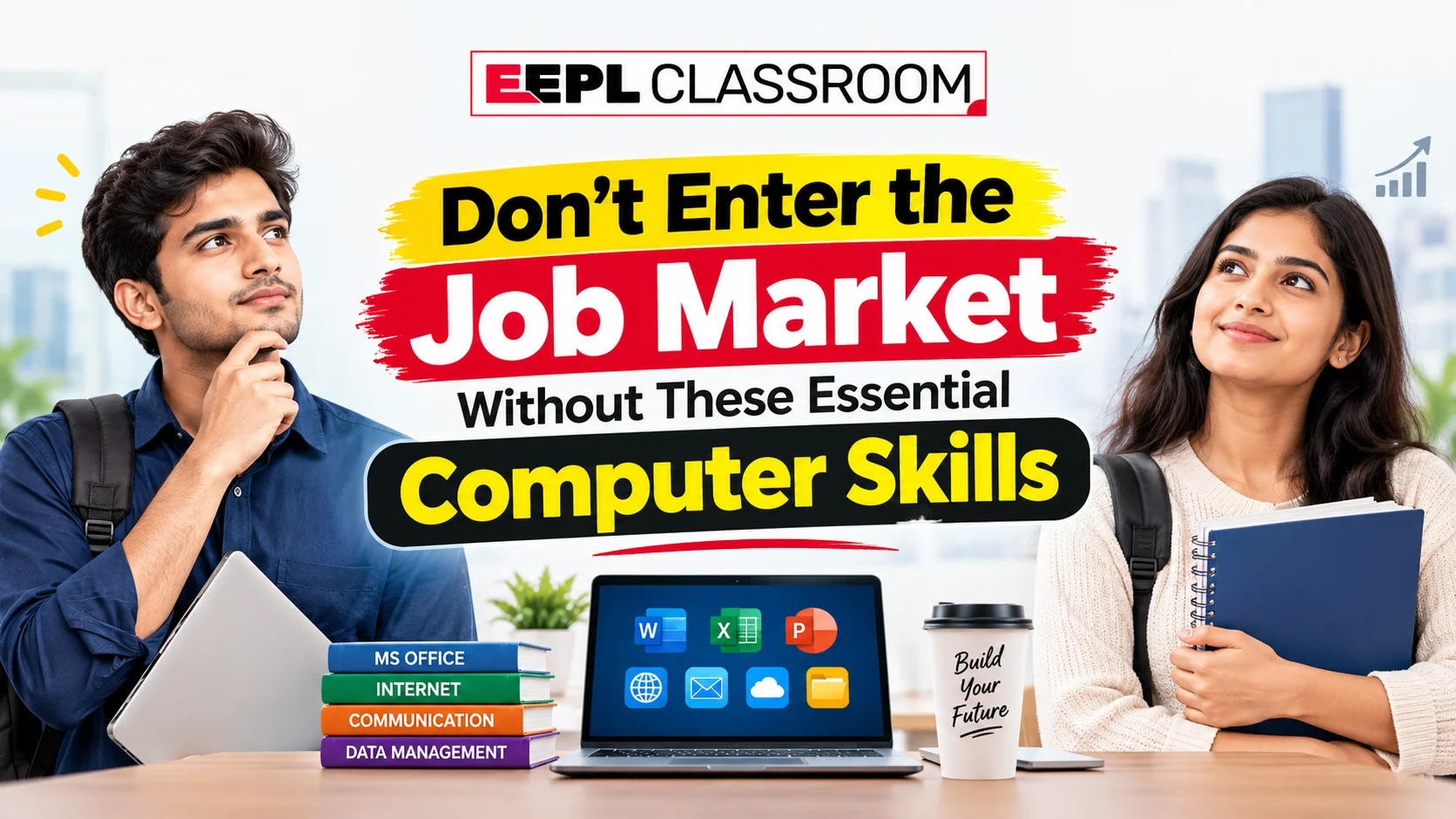
Introduction
Getting a degree is an important step towards building a career, but graduation alone may not prepare you for every task employers expect you to perform. Many entry-level positions involve creating documents, managing spreadsheets, sending professional emails, preparing reports, and working with digital platforms.
Imagine attending a job interview for an office assistant position. You have the required educational qualifications, but the interviewer asks you to prepare a spreadsheet, format a document, or send an email with an attachment. Without practical computer knowledge, even simple tasks can become challenging.
This is why essential computer skills for jobs should be a priority for students, graduates, and freshers preparing to enter the workforce.
The good news is that you do not need to become a programmer or master every software application to get started. You can begin with computer fundamentals, MS Office, internet usage, email communication, and digital safety. After building these basics, you can learn specialised skills that match your career goals.
In this guide, EEPL Classroom explains the essential computer skills you should learn before entering the job market and how to practise them effectively.
Why Are Computer Skills Important Before Applying for a Job?
Computers and digital tools support everyday work across many industries. Administrative employees prepare documents, accountants maintain financial records, sales teams analyse data, and customer support professionals communicate through digital platforms.
The specific requirements vary by employer and job role, but basic digital competence can help you complete routine tasks more independently.
Developing computer skills can help you:
- Prepare professional documents and reports.
- Organise information and maintain digital records.
- Communicate effectively with employers and colleagues.
- Complete online applications and recruitment assessments.
- Improve accuracy when working with data.
- Build a foundation for specialised computer courses.
However, computer knowledge does not guarantee a job. Employers may also assess your qualifications, communication, practical experience, problem-solving ability, and suitability for the position.
1. Computer Fundamentals and File Management
Before learning advanced applications, make sure you understand how to operate a computer confidently. Computer fundamentals are the starting point for almost every other digital skill.
Learn the difference between hardware and software, understand basic operating system functions, and practise using a keyboard, mouse, and common applications.
File management is equally important. You should know how to create folders, save files, rename documents, copy information, and locate files when required.
For example, imagine you are applying for several jobs. Keeping your resume, certificates, cover letters, and project files organised in separate folders can make the application process easier.
Skills to practise:
- Creating and organising folders.
- Saving and retrieving documents.
- Understanding PDF, DOCX, and XLSX file formats.
- Using common keyboard shortcuts.
- Installing or opening applications safely.
- Managing files without accidentally deleting important information.
These basic abilities provide a strong foundation for workplace computer use.
2. Microsoft Word for Professional Documentation
Microsoft Word is an important application for creating and editing documents. These skills are valuable in a wide range of roles, including office administration, teaching, human resources, and general support positions across different industries.
Being able to type alone is not enough to succeed in today’s digital workplace. You should also understand how to format documents professionally and present information clearly.
Start by learning text formatting, paragraph alignment, page margins, headings, tables, page numbering, and document saving. Practise exporting documents to PDF when you need to share a consistent version.
For practical experience, create a resume, a formal application letter, a meeting notice, and a short report.
For example, if an employer asks you to prepare a one-page report, you should be able to organise the content with headings, readable formatting, and appropriate spacing.
These exercises help you apply your knowledge instead of simply memorizing software features.
3. Microsoft Excel for Data Management
Excel is one of the most useful computer applications for people entering office-based, accounting, administrative, and reporting-related roles.
It helps users organise data, perform calculations, maintain records, and present information in a structured format.
Begin with cells, rows, columns, number formatting, and basic formulas. Then practise functions such as SUM, AVERAGE, COUNT, and IF. As your knowledge improves, learn sorting, filtering, charts, conditional formatting, lookup functions, and PivotTables.
Consider an example: a small business maintains a monthly sales record. With Excel, an employee can calculate total sales, compare monthly performance, and identify which products generated the most revenue.
This is the kind of practical task that employers may expect in roles involving spreadsheets.
Tip: Build a sample workbook containing monthly expenses, sales figures, or student records. Practicing with realistic data can improve your confidence and help you identify mistakes.
You can later explore Advanced Excel if your intended career involves reporting, accounting, operations, or data analysis.
4. Email and Professional Communication
Professional email communication is another essential workplace skill. Employers may use email to share instructions, schedule interviews, exchange documents, and communicate with customers.
A professional email should have a clear subject line, an appropriate greeting, a concise message, and a polite closing. You should also know how to attach files and use CC and BCC correctly.
For example, when applying for a job, your email should clearly mention the position you are applying for and include the requested documents.
In addition to email, practice using video meeting platforms, online calendars, and workplace messaging tools where relevant.
Remember that effective digital communication is not only about using software. It also requires clear writing, respectful language, and attention to detail.
5. Internet Skills and Cyber Security Awareness
Most job seekers use the internet to search for vacancies, submit applications, research companies, and participate in online recruitment processes.
Learn how to use search engines effectively, navigate job portals, upload documents, complete online forms, and identify reliable information.
At the same time, understand basic cybersecurity practices. Job seekers may encounter fraudulent recruitment messages, suspicious links, or requests for sensitive information.
Protect yourself by following these practices:
- Use strong, unique passwords for important accounts.
- Enable two-factor authentication when available.
- Avoid opening suspicious email attachments.
- Verify recruiters and employers before sharing sensitive information.
- Never disclose passwords or one-time passwords to unverified contacts.
· Always get your software and files from reliable, verified sources to keep your device safe.
These habits help you use digital platforms more safely during your job search and professional life.
6. PowerPoint and Presentation Skills
PowerPoint is useful for presenting information during meetings, training sessions, academic projects, and business discussions.
You should know how to create slides, organize content, insert images and charts, and maintain consistent formatting. Focus on making your slides clear rather than filling them with excessive text or unnecessary animations.
Try creating a five-slide presentation about your academic project, a business idea, or a topic related to your intended career.
This exercise helps you practice structuring information and explaining your ideas.
Although presentation software is not required for every job, it can be a useful additional skill for graduates who expect to prepare reports, deliver presentations, or support team projects.
7. Choose Career-Specific Computer Skills
After learning the basics, consider developing a specialized skill. The right choice depends on your educational background, interests, and the requirements of the jobs you want to pursue.
|
Career direction |
Skills worth exploring |
|
Office administration |
MS Office, Excel, email, file management |
|
Accounting |
Tally Prime, accounting fundamentals, Excel |
|
Data analysis |
Advanced Excel, SQL, Power BI |
|
Web development |
HTML, CSS, JavaScript |
|
Software development |
Programming fundamentals, Python or Java |
|
Digital marketing |
SEO, analytics, content management tools |
|
Customer support |
Email, spreadsheets, CRM software |
You do not need to learn every skill listed in this table. Start with the requirements that appear most frequently in relevant job descriptions.
For example, a commerce graduate interested in accounting may benefit from learning Excel and accounting software. A graduate interested in web development can begin with HTML, CSS, and JavaScript after becoming comfortable with computer fundamentals.
At EEPL Classroom, learners can explore foundational and specialised options through the DCA Computer Course, the ADCA Computer Course, and other programmes listed on the EEPL Classroom website.
Review the syllabus and practical training offered by each programme before enrolling.
8. How to Prepare Yourself Before Entering the Job Market
Learning computer skills becomes more effective when you follow a clear plan. Instead of studying several applications simultaneously, focus on one skill at a time and apply what you learn.
Follow these steps:
Step 1: Assess your current knowledge. Identify which computer tasks you can perform independently and where you need additional practice.
Step 2: Learn the basics first. Build confidence in computer operations, file management, typing, and internet usage.
Step 3: Practise office applications. Use Microsoft Word to prepare documents, Excel to organise data and perform calculations, and PowerPoint to design clear, engaging presentations.
Step 4: Select a career direction. Identify the skills commonly requested in job descriptions for your preferred roles.
Step 5: Complete practical projects. Prepare a sample report, spreadsheet, presentation, or relevant technical project to demonstrate your abilities.
Step 6: Prepare for interviews. Practise explaining what you have learned and how you would use those skills to complete workplace tasks.
You can learn independently, take a structured computer course, or combine both approaches. The important thing is to practise consistently and understand how each skill applies to real work.
Conclusion
Entering the job market without basic computer knowledge can make certain workplace tasks more difficult. Computer fundamentals, Microsoft Word, Excel, email communication, internet skills, cybersecurity awareness, and presentation tools provide a practical starting point for many graduates and freshers.
Once you develop these skills, choose a specialisation that matches your career goals. Whether you are interested in accounting, administration, data analysis, programming, or digital marketing, focus on the tools and abilities relevant to your preferred roles.
Remember that learning software is only the beginning. Regular practice, practical projects, communication, and problem-solving are equally important when preparing for employment.
If you want structured guidance, explore the computer and IT learning options available at EEPL Classroom. Choose a course that matches your current knowledge, practise what you learn, and prepare to demonstrate your skills confidently when applying for jobs.
FAQs
1. What computer skills should I learn before applying for a job?
Start with computer fundamentals, file management, Microsoft Word, Excel, email communication, internet usage, and basic cybersecurity. Next, focus on learning the specific tools and software that match your chosen career path.
2. Is Excel necessary for freshers?
Excel is useful for many entry-level roles involving records, calculations, spreadsheets, and reports. The required level depends on the job, but learning basic formulas, sorting, filtering, and formatting is a practical starting point.
3. Can I get a job after completing a basic computer course?
A basic computer course can help you develop relevant skills for some entry-level positions. However, employment depends on the role, your qualifications, practical abilities, experience, and the employer's selection criteria.
4. Which computer course is suitable for beginners?
A foundation-level programme such as DCA may suit beginners who want to learn computer applications. Those seeking broader training can compare ADCA and specialised courses. Always check the syllabus and practical learning opportunities before enrolling.
5. Which institutes in Ranchi offer training in basic computer skills?
You can explore computer and IT courses at EEPL Classroom in Ranchi. Visit eepl.me to review available programmes and choose an option based on your learning needs and career interests.