Can Non-Technical Students Learn Python?
Wondering if non-technical students can learn Python? Discover why beginners thrive with the right guidance. Join EEPL Classroom's Python course in Ranchi today.
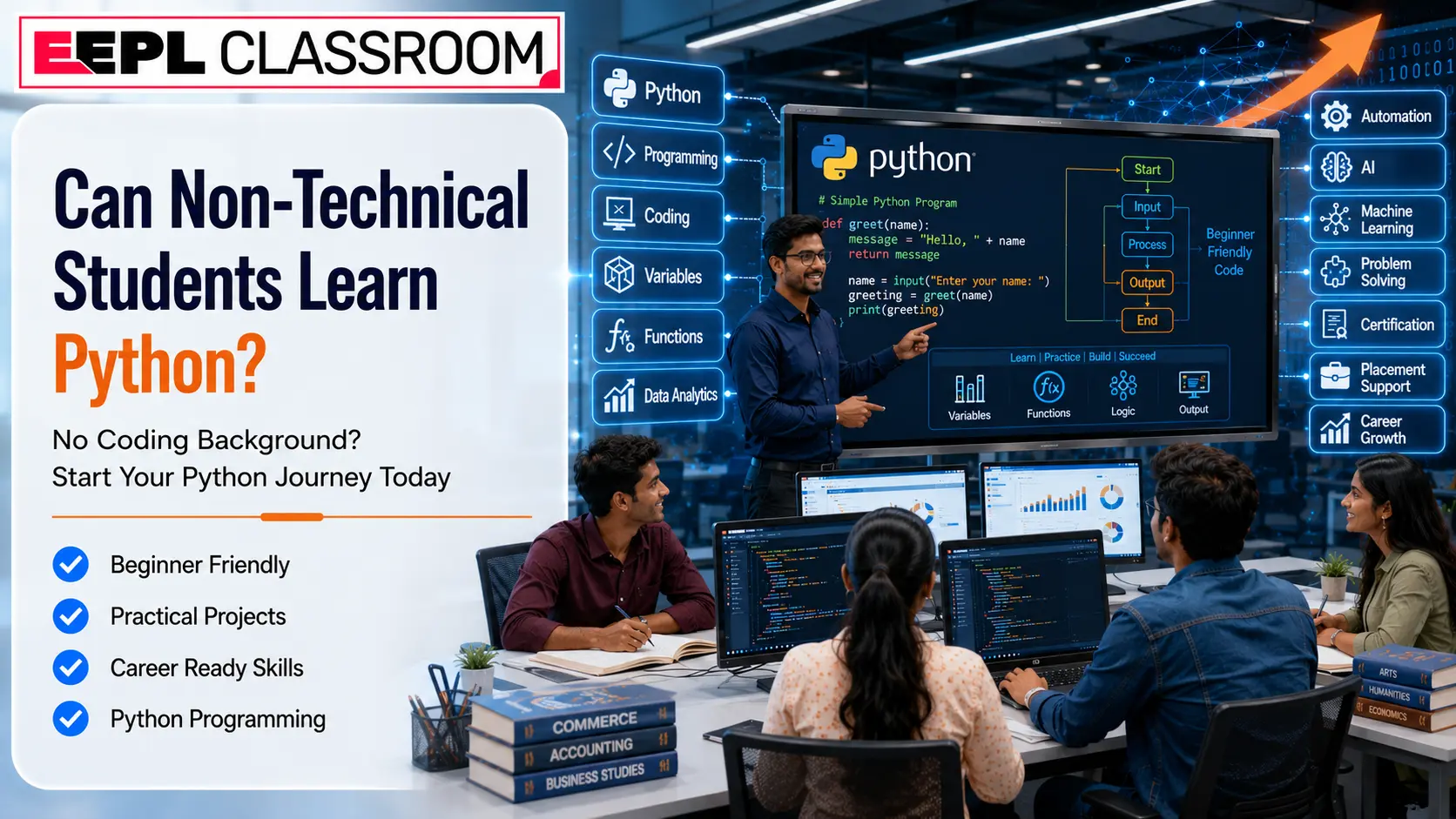
If you come from a Commerce or Arts background and have ever wondered, "can non-technical students learn Python?", the honest answer from our experience at EEPL Classroom is a confident yes. As one of Ranchi's leading computer training institutes, we have taught Python for beginners from every possible academic background and time and again, students with zero coding history have gone on to build real projects, pass certifications, and even switch careers into IT. This blog breaks down exactly why Python is so accessible, and how a non-technical student can realistically get started.
Who Can Learn Python? Breaking the "Only for Engineers" Myth
There is a common misconception that programming is reserved for engineering or computer science students. In reality, Python was specifically designed to be readable and simple, which is why it has become the go-to beginner-friendly language across the world. At EEPL Classroom, we regularly enrol:
Commerce and Arts graduates with no prior technical exposure
Working professionals from HR, finance, and marketing backgrounds
College students from non-IT streams looking to add a technical skill
Fresh 12th-pass students exploring a Python course after 12th
Career switchers moving from unrelated fields into IT
If you fall into any of these categories, rest assured that learning Python without coding experience is not just possible, it is common.
What Makes Python Ideal for Non-Technical Students?
Python programming for beginners works well because the language itself was built around simplicity and readability, unlike older languages such as C++ or Java that require more rigid syntax knowledge upfront. A few reasons Python suits non-technical students particularly well:
Simple, English-like syntax: Python code reads almost like plain instructions, reducing the intimidation factor for first-time learners.
No heavy prerequisite math or logic: While logical thinking helps, Python doesn't demand prior programming or advanced mathematics knowledge to get started.
Huge beginner community and resources: Because Python is so widely taught, learners have access to countless tutorials, forums, and practice exercises.
Visible, quick results: Even in the first few classes, students can write small working programs, which builds confidence early.
This is exactly why we consider Python the best entry point for anyone asking, "is Python difficult to learn?" The answer depends far less on your academic background and far more on the quality of guidance and practice you receive.
Can Arts and Commerce Students Really Learn Python?
This is one of the most frequent questions we hear at our Ranchi centre: "can arts students learn Python?" and "can commerce students learn Python?" Based on real outcomes from our classrooms, the answer is yes, provided the teaching approach matches their pace and background.
At EEPL Classroom, we structure our Python course for beginners specifically to accommodate students who have never touched code before. Our approach includes:
Starting from absolute basics — variables, data types, and simple logic — before touching any advanced topic
Using relatable, real-world examples instead of abstract technical jargon
Allowing extra practice time for students who need more repetition to grasp programming basics
Pairing every concept with hands-on projects so learning feels practical rather than theoretical
Commerce students, in particular, often find Python useful for tasks like data handling and automation in accounting or finance-related work, which makes the learning process feel directly relevant to their career goals.
Why Should Non-Technical Students Learn Python? Career and Skill Benefits
Beyond just "can I learn it," the more important question is why it's worth the effort. Here's why coding skills in Python matter for non-technical learners:
Growing Career Opportunities
Python is one of the most in-demand programming languages globally, used extensively in software development, data analysis, automation, artificial intelligence, and machine learning. Even professionals who don't become full-time developers use Python to automate repetitive tasks, analyse data, or build simple tools that make their existing job easier.
A Gateway Into IT Careers
For students wondering if Python is a good career option for non-technical students, our placement experience says yes. Many of our students who started with zero technical background have used Python as their entry point into IT career paths, eventually branching into data science, web development, or automation roles.
Builds Transferable Problem-Solving Skills
Learning Python naturally develops problem-solving skills and logical thinking, which are valuable in virtually any profession, not just technical roles. This is one reason recruiters increasingly value basic Python knowledge even in non-developer positions.
How Long Does It Take to Learn Python?
A common long-tail question we receive is, "how long does it take to learn Python?" For most non-technical students following a structured, guided programme, building solid working knowledge typically takes around 2 to 4 months, depending on the pace and depth of the course. Mastering more advanced applications like data analysis or automation naturally takes longer, but functional, job-relevant Python skills are achievable well within a few months of consistent practice.
How EEPL Classroom Makes Python Learning Easy for Beginners
Our Python training for beginners in Ranchi is built around a few core principles that specifically address the challenges non-technical students face:
Step-by-step curriculum: Concepts are introduced gradually, ensuring no student feels lost or left behind.
Practical training with real projects: Instead of only theory, students work on actual mini-projects to reinforce learning.
Doubt-clearing support: Since non-technical learners often need more clarification, our trainers dedicate additional time to one-on-one doubt resolution.
Industry-ready skills focus: The course is designed to align with what local and remote employers actually expect from Python-trained freshers.
Python certification upon completion, adding credibility to your resume.
If you are exploring a structured, beginner-friendly Python course in Ranchi, our detailed programme structure and batch details are available on our Python Course in Ranchi page.
Why Choose EEPL Classroom as Your Python Institute in Ranchi
When searching for the best Python training institute in Ranchi, students and parents typically look for practical training quality, trainer experience, and genuine outcomes — not just marketing claims. At EEPL Classroom, our Python classes in Ranchi are designed with:
Small batch sizes for better individual attention
Trainers experienced in guiding non-technical and first-time coding learners
A job-oriented Python course in Ranchi structure aligned with current industry expectations
Flexible batch timings suitable for students, freshers, and working professionals
A learning environment specifically comfortable for beginners, not just technically inclined students
Our EEPL Python course in Ranchi has helped numerous non-technical students move confidently from "I've never coded before" to writing functional Python programs and pursuing further specialisation in Data Analytics, Machine Learning, or Artificial Intelligence.
Final Thoughts: Non-Technical Background Is Not a Barrier
If you've been hesitating to start because you think programming isn't "your thing," the real-world experience at EEPL Classroom tells a different story. Can non-technical students learn Python? Absolutely — with the right structure, pace, and support, a non-technical background is not a limitation; it's simply a different starting point.
Whether you're a student exploring options after 12th, a working professional considering a career switch, or simply someone wanting to add a valuable digital skill to your resume, Python remains one of the most accessible and rewarding programming languages to begin with.
Frequently Asked Questions About Can Non-Technical Student Learn Python
1. Can a beginner learn Python?
Yes, Python is specifically designed to be beginner-friendly, with simple, readable syntax that doesn't require prior programming knowledge. Absolute beginners, including those with no technical background, can start learning Python and build basic working programs within the first few weeks of structured training.
2. Is Python easier than Java?
Yes, Python is generally considered easier than Java for beginners. Python's syntax is closer to plain English and requires less boilerplate code, whereas Java demands stricter syntax rules and more upfront understanding of object-oriented concepts, making Python a gentler starting point for non-technical learners.
3. Which degree is required to learn Python?
No specific degree is required to learn Python. Students from Arts, Commerce, Science, or any other academic background can learn Python, as the language does not demand prior technical education. What matters more is consistent practice and a structured learning approach suited to beginners.
4. Can I learn Python after 12th?
Yes, many students start learning Python right after completing 12th standard, regardless of their stream. A well-structured Python course after 12th can help build strong programming fundamentals early, giving students a head start before pursuing further studies or entry-level IT roles.
5. Can commerce students become Python developers?
Yes, commerce students can become Python developers with dedicated learning and practice. While it may take slightly more foundational work initially, many commerce graduates have successfully transitioned into Python-based roles, especially in areas like data analysis and automation relevant to business and finance.
6. Is Python enough to get a job?
Python alone can help you secure entry-level roles, especially in data-related or automation-focused positions, but combining it with additional skills like data analytics, SQL, or basic web development significantly improves job prospects and opens doors to more specialised, higher-paying roles.
7. What jobs can I get after learning Python?
After learning Python, you can pursue roles such as junior Python developer, data analyst, automation executive, or entry-level software support roles. With additional specialisation, Python also opens pathways into data science, machine learning, and AI-related career opportunities.
8. How much does a Python developer earn in India?
Entry-level Python developers in India typically earn between ₹2.5 to ₹4.5 lakhs per annum, depending on the city, company, and additional skills. Salaries increase significantly with experience, specialisation in data science or AI, and exposure to real-world projects during training.
Additional SEO Deliverables
Meta Title: Can Non-Technical Students Learn Python? | EEPL Classroom, Ranchi
Meta Description: Wondering if non-technical students can learn Python? Discover why beginners thrive with the right guidance. Join EEPL Classroom's Python course in Ranchi today.
Category: Computer Courses / Programming Courses
Tags: Python Course in Ranchi, Learn Python for Beginners, Python for Non-Technical Students, EEPL Classroom, Python Training, Python Course After 12th, Programming for Beginners, Best Computer Institute in Ranchi